
Academics, brought to life.
At WSA, the arts and hands-on work make academics something children feel and embody, not just memorize. The result is a rigorous education that sticks, and children who genuinely love to learn.
About our curriculum.
-
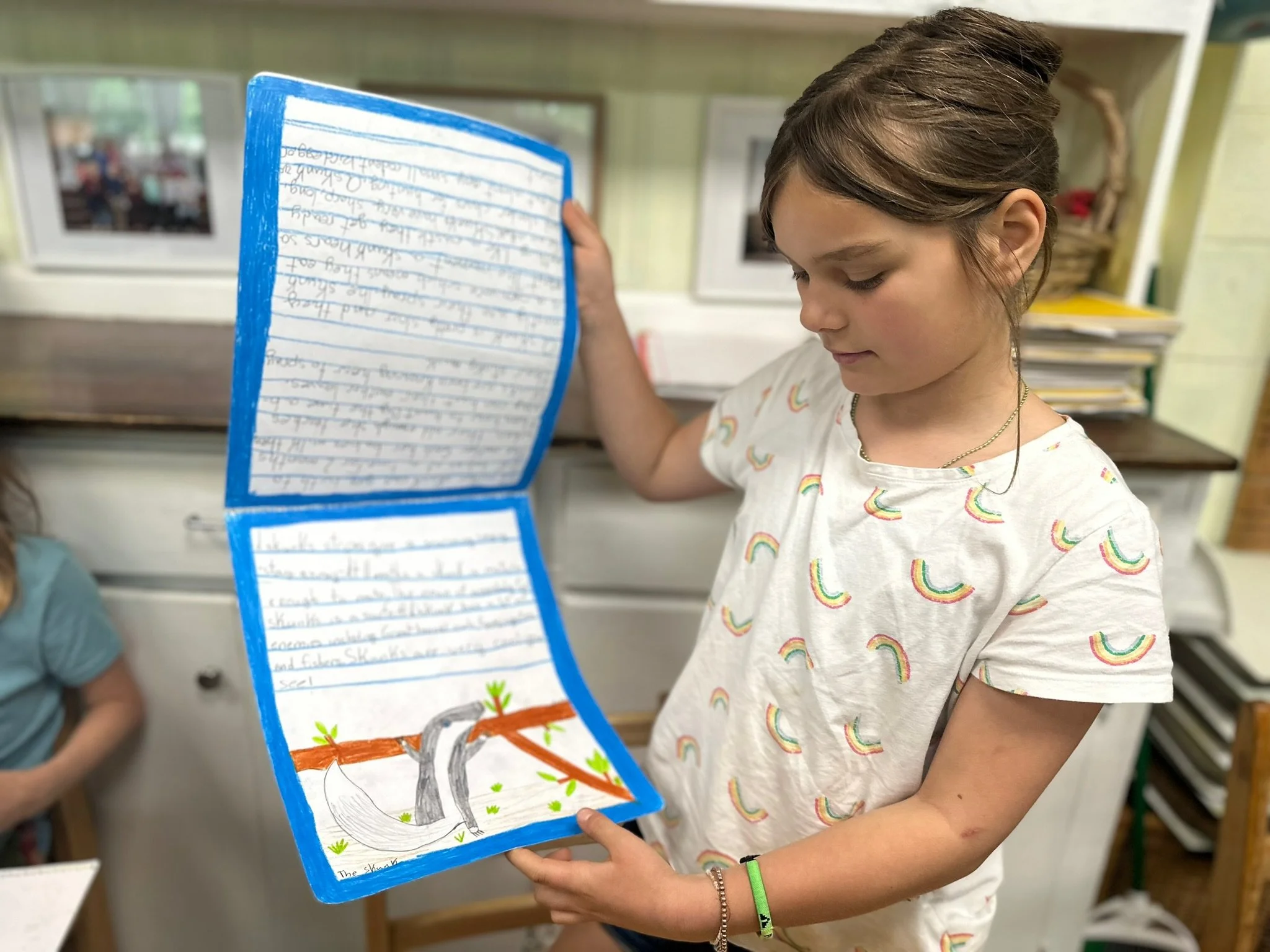
Each day opens with the Main Lesson, which, after warm-up activities, is the most rigorous academic time of the morning when children are their most energetic and receptive. The Main Lesson dives deep into a single subject for several weeks at a time, taught through story, art, and direct experience so that ideas take root and stay. Students write and illustrate their own main-lesson books as they go, making each subject their own. Every subject is taught experientially and artistically, as well as intellectually. It is a fully coordinated, developmentally grounded curriculum, rich in academics and enlivened by the arts and practical skills.
-
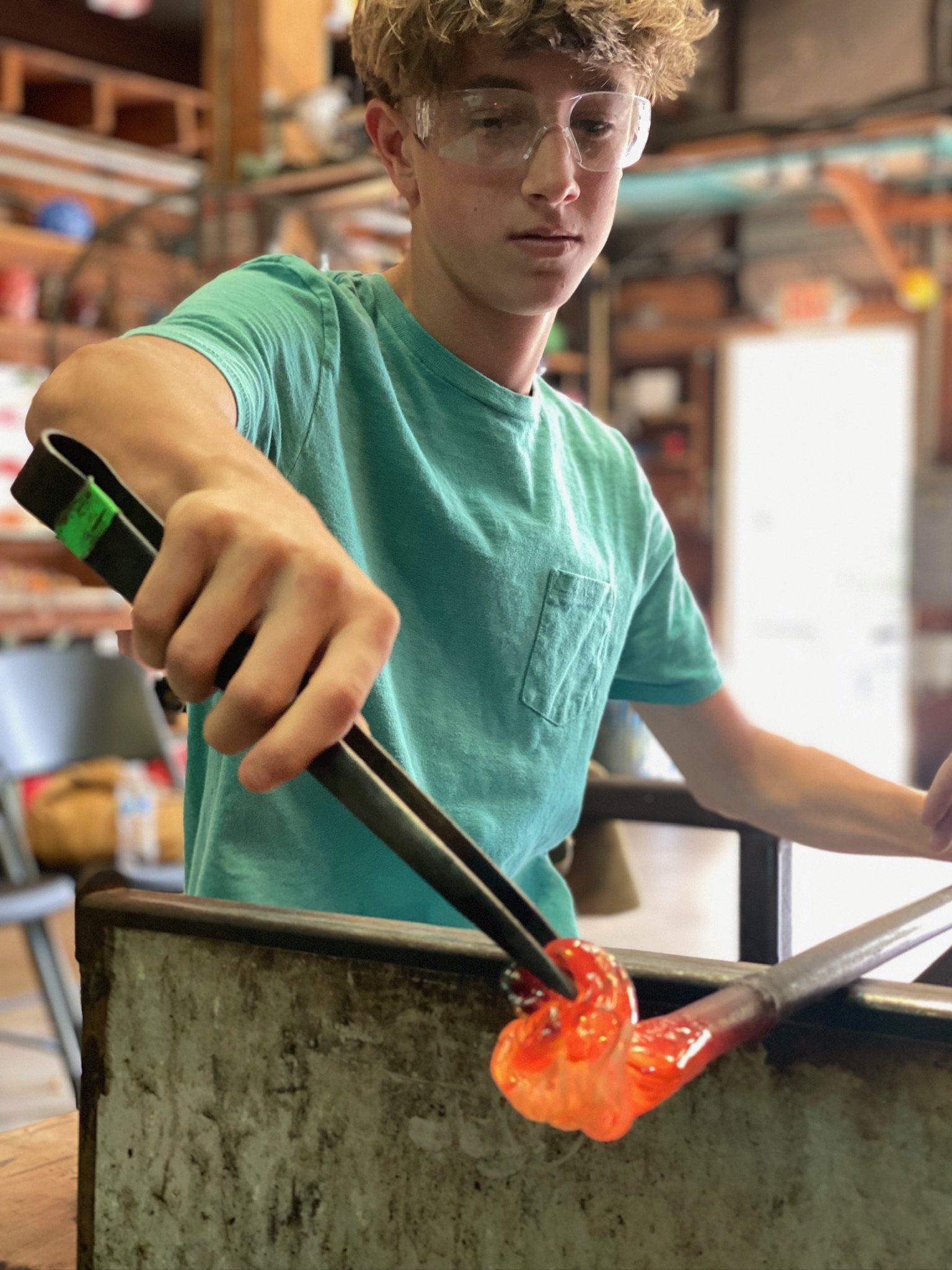
At WSA, drama, visual art, handwork, music, and movement are integral to every day's learning, used to bring material to life and deepen understanding. Every WSA student learns to play an instrument, paint, draw, and work with their hands. Every grade also performs a class play each year. During a dedicated period of weeks, the whole class brings a story to life on stage: learning lines, building sets and costumes, and finding their voices together. It is a yearly rite that grows memory, language, courage, and the deep satisfaction of making something as one.
-
A class teacher typically stays with the same children for multiple years as they move up through the grades. With years to know each child personally, a teacher understands their strengths and challenges deeply, and can meet each one right where they are. It is one of the most powerful, and most distinctive, features of a Waldorf education. Our class teachers are fully certified through accredited Waldorf teacher training institutes, two years beyond a bachelor's degree. They keep training every year, honing their skills as they model for the students the meaning of a “life-long learner.”
-
Waldorf students become voracious readers. We do not force formal reading instruction too early. Instead, through storytelling, performance, and the artistic drawing of letters and words, children build a genuine hunger for language. Reading emerges in its own time and grows into a lifelong love of books.
-
Make no mistake: the math and science here are rigorous, and taught in ways that connect to the real world. WSA students graduate eighth grade having completed the same core math and science Georgia expects of every student, including Algebra I. They leave as critical thinkers and problem-solvers, prepared for any field they choose.
-
From the earliest years through eighth grade, the curriculum grows with the child, meeting each stage of development with exactly what the child needs. Morning Garden (birth to 30 months old).
Weekly adult-and-child classes, where babies and toddlers and their grown-ups share songs, play, and the rhythm of the morning in a small, warm community.
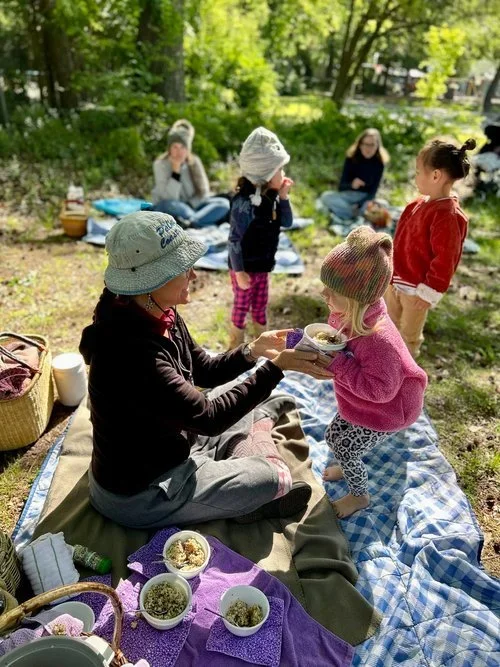
Early Childhood (preschool through kindergarten, ages two to six). Purposeful play is the real work of childhood. Through baking, gardening, painting, storytelling, and handwork, children build the focus, language, and social footing all later learning stands on.
Grade 1. The joyful start of formal schooling, where children meet letters and numbers through story and image, and a class becomes a community.
Grade 2. Fables and legends bring human qualities to life, while arithmetic and literacy grow through movement, rhythm, and rhyme.
Grade 3. The practical year. Children study how people build, farm, and live, work with time, money, and measurement, and tend the garden and chickens on campus.
Grade 4. A new independence. Students explore Norse myths and the geography of their own region, and bring fractions to life in precise, beautiful geometric drawings.
Grade 5. The ancient world, from Egypt and India to Greece, comes alive, and fifth graders join the Greek Olympiad, a pentathlon shared with other Waldorf schools.
Grade 6. Rome, the medieval world, and the birth of modern science. Students run their own experiments and take up business math and economics.
Grade 7. The age of exploration and the Renaissance, with creative writing, geometry and pre-algebra, and the study of human physiology.
Grade 8. A culminating year of revolutions and the making of the modern world, with lab reports, current events, and the move toward thinking for oneself, before students step on to high school.
-
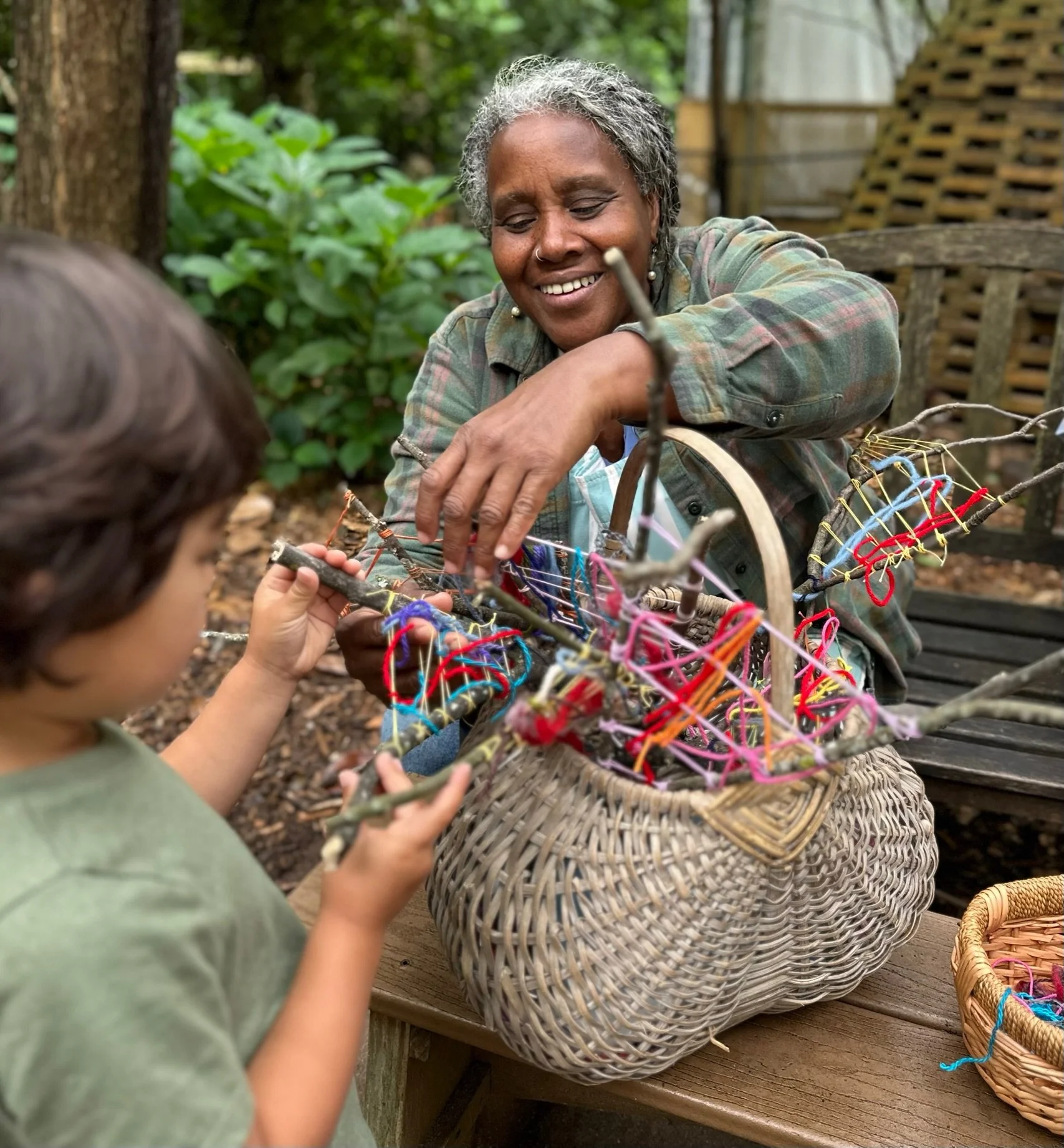
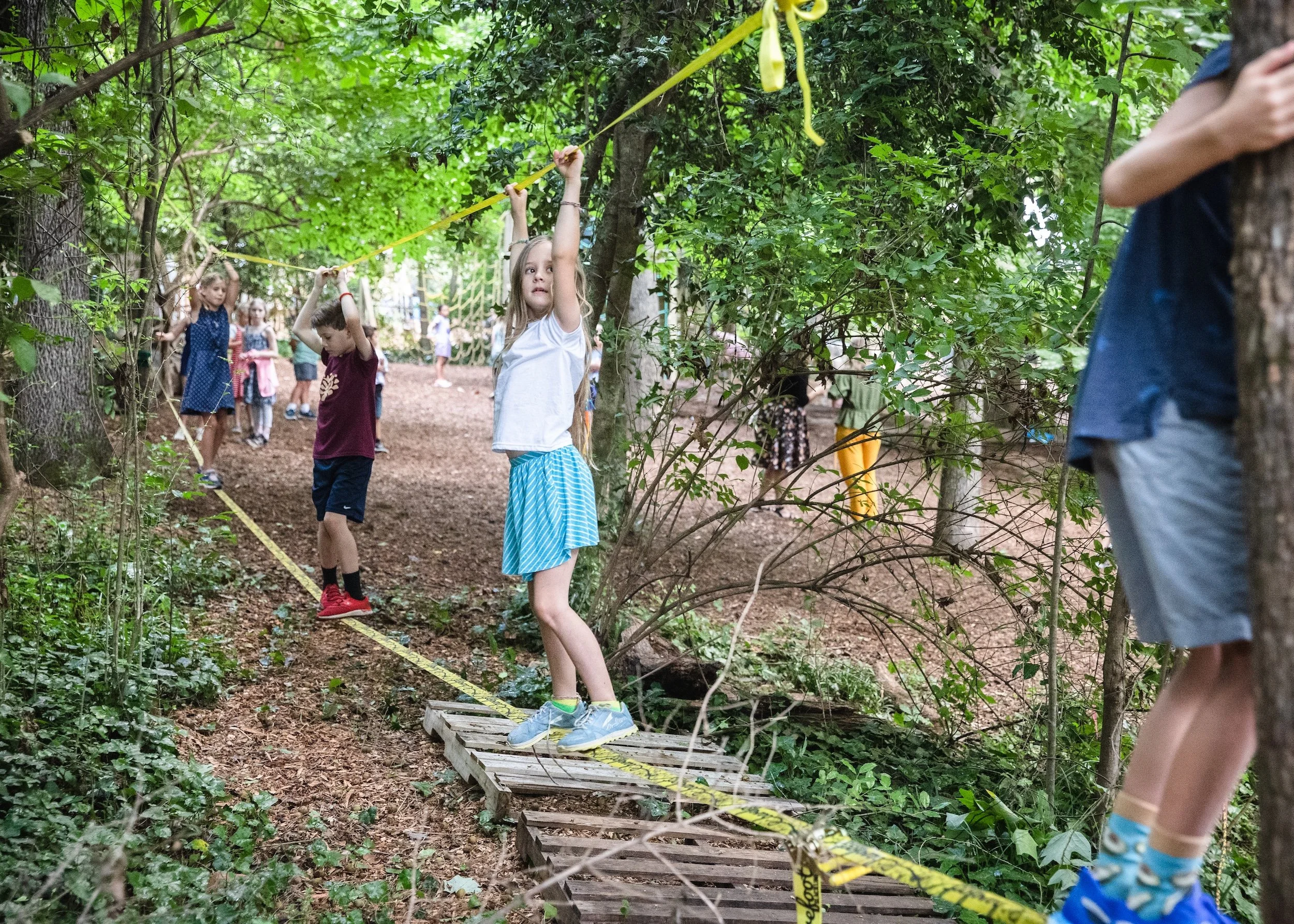
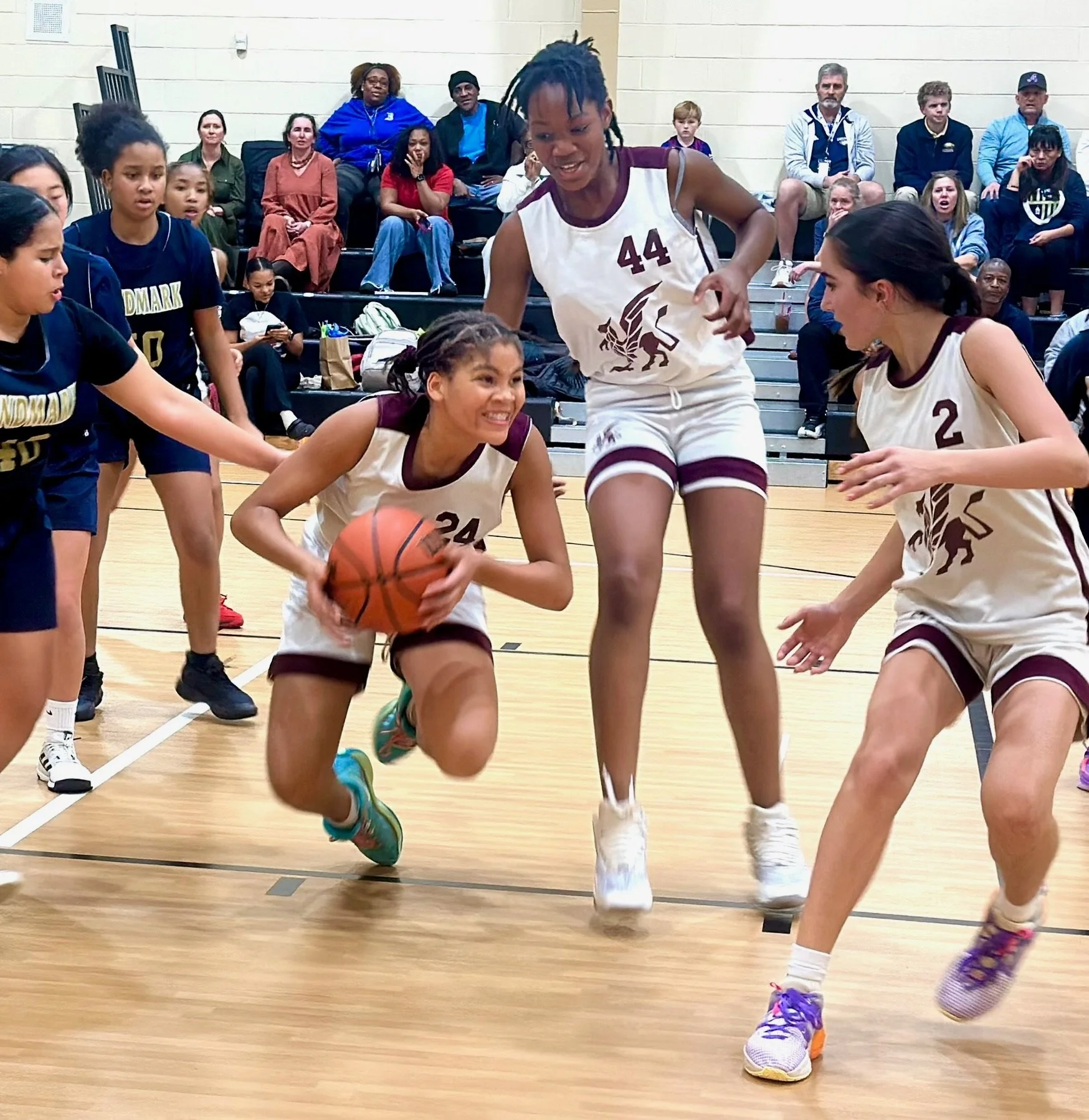
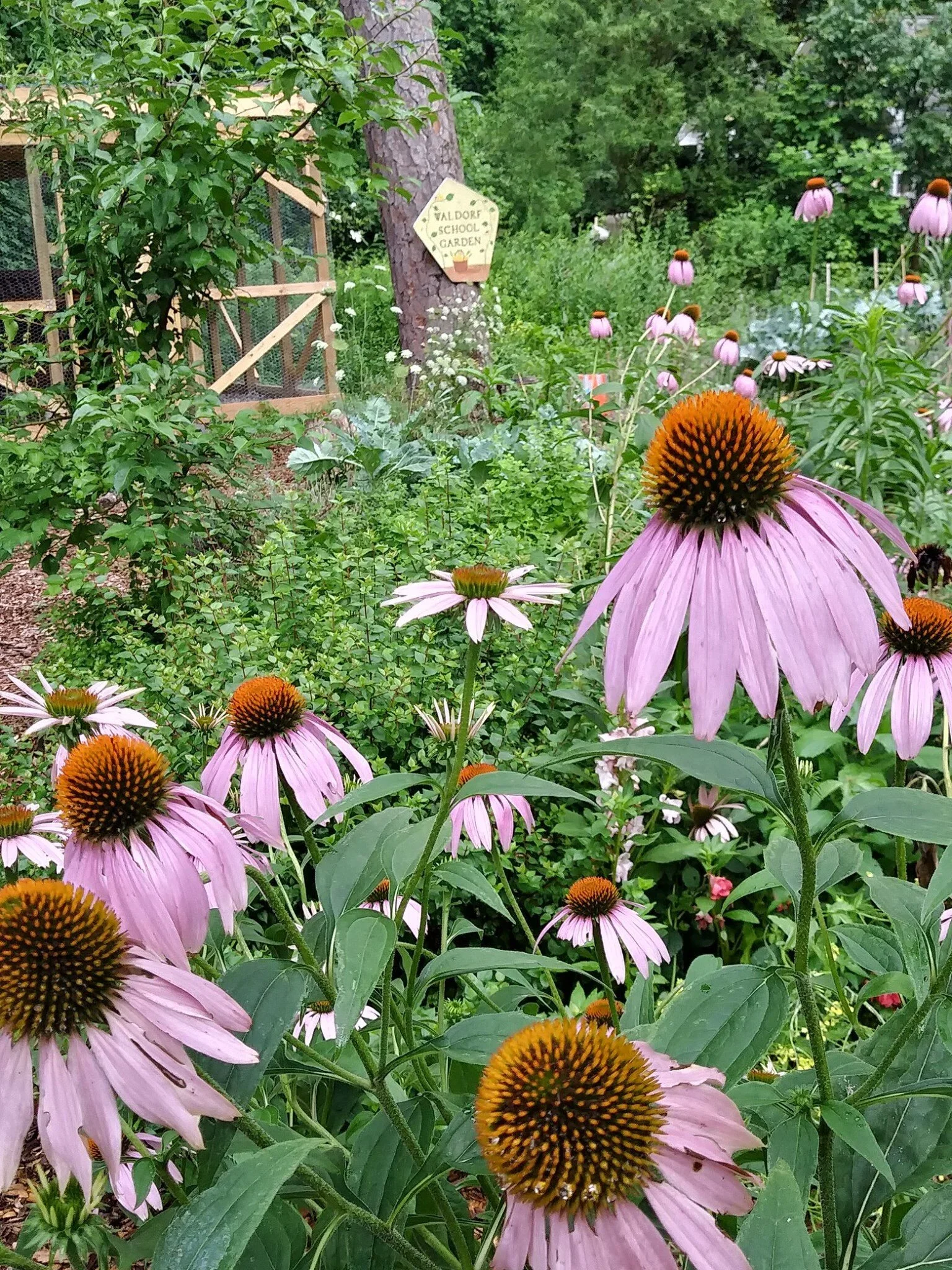
Spanish, taught from first grade through the culture itself: songs, games, stories, food, and dance. Music, woven through every day, from pentatonic songs and the recorder in the early grades to strings, ensembles, and choirs in middle school. Gardening, where children grow food, care for the land, and bring the classroom's lessons to life. Handwork and woodwork, where knitting, sewing, and working with wood build patience, focus, and skill. Eurythmy (movement set to music and spoken word), which develops concentration, grace, and a feeling for others. Movement and games, building coordination and teamwork, leading to the Grade 5 Olympiad and sports in the middle grades.
-
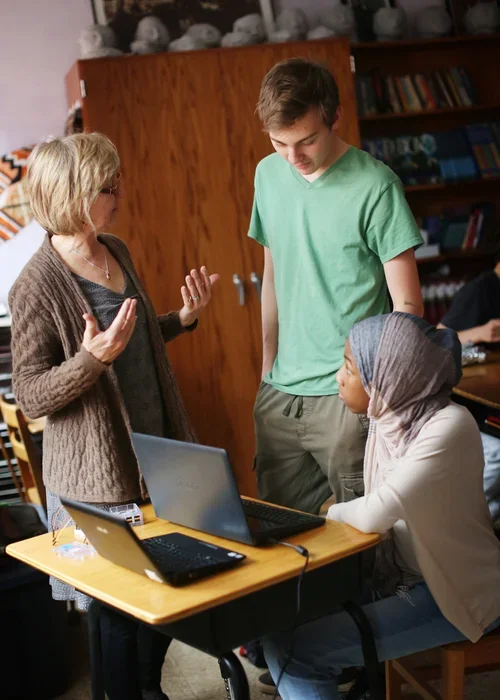
WSA practices Media Mindfulness: intentional, age-appropriate technology. In a world saturated with screens, we protect the imagination and attention of childhood and build the focus, discernment, and critical thinking screens cannot teach. Technology is introduced thoughtfully, in step with each child's development.
-
Every child learns differently. Our Learning Specialists work alongside class and specialty teachers to understand each student and provide differentiated instruction, classroom accommodations, and supplemental support. When a child's needs go beyond what we offer, we partner openly with outside professionals.
-
WSA graduates leave ready for the high school of their choice, including Academe of the Oaks, Paideia, Woodward, Decatur High School, and the area arts magnets, and in time for more than 80 colleges and universities. They are critical thinkers, creative makers, and compassionate leaders, prepared for whatever comes next. The proof is in the graduate.