Meet Maggie Hall: Therapist, Musician, Artist
When tackling a challenging course in human anatomy during grad school, occupational therapist Maggie Hall did what she’d always done: She took a creative approach. Building on the integration of art and science she’d practiced throughout her years as a Waldorf student, Maggie created detailed diagrams of the body in her notes—much like notes in her Main Lesson books—and soon her classmates were asking for copies of her artwork.
Having attended the Waldorf School of Atlanta since kindergarten, Maggie was used to thinking across disciplines. Through her undergraduate career at both Warren Wilson College and Georgia College, graduate school at Brenau University, and ten years in practice as an OT, she has continued to blend her passion for science, psychology, art, and music. “I think that's a big part of what I learned at Waldorf,” she says. “I can forge my own path. And I can always take new paths.”
We talked with Maggie about her work in therapy, her love of making art and music, and how Waldorf education meets children today.
How did you find your calling in occupational therapy?
I studied psychology in college. I had a hard time picking what I wanted to study. I was a math major. I was a biology major. I was a sociology major. I was an arts major. Then I landed on psychology with a minor in Creative Arts Therapy.
I was leaning towards becoming a music therapist, but when I found occupational therapy, I loved it because you can bring in so many different things: art, music, movement. It felt really aligned with who I am—I love so many different things and I love to meet each child where they are. I graduated from Brenau in 2015 and I've been an OT for 10 years.
Tell me a little more about your practice.
At About Play, we work with children across a wide age range, anywhere between 1 and 21. It’s child-led and based on sensory integration. We do a lot of reflex integration work. A lot of our therapists are Reiki trained. We're very much a holistic practice. I love being able to meet each child in different ways.
I also work with the Waldorf school, doing screenings and working with teachers. It’s been fun to come back and work with the school again.
From a professional perspective, how do you see Waldorf education meeting the children you work with?
Waldorf teachers have a developmental mindset when they're thinking about the way that they're teaching and the way that they're meeting each child. From a motor planning-reflex integration standpoint, the amount of movement that happens during the day in a Waldorf school—the amount of midline crossing, the amount of bilateral coordination activities—is amazing. Being able to have body awareness, even those who really struggle with it, sets children up for success.
Waldorf children seem a lot more independent and they have a sense of agency. They have jobs that they do. They chop vegetables. They work as a group. They put on their shoes. They put on their jackets.
Ideation is so hard for many kids. They walk into a room and don't know how to play. They stare at the equipment in the OT studio. A child from the Waldorf school will naturally see what they could do or put together. They build a whole world with just the materials that are in front of them. I see that as a striking difference.
How do you imagine your practice going forward? What’s ahead for you?
I'm at an interesting crossroads. I love what I do in OT, and my practice is ramping up, but I also love playing music and I love making art.
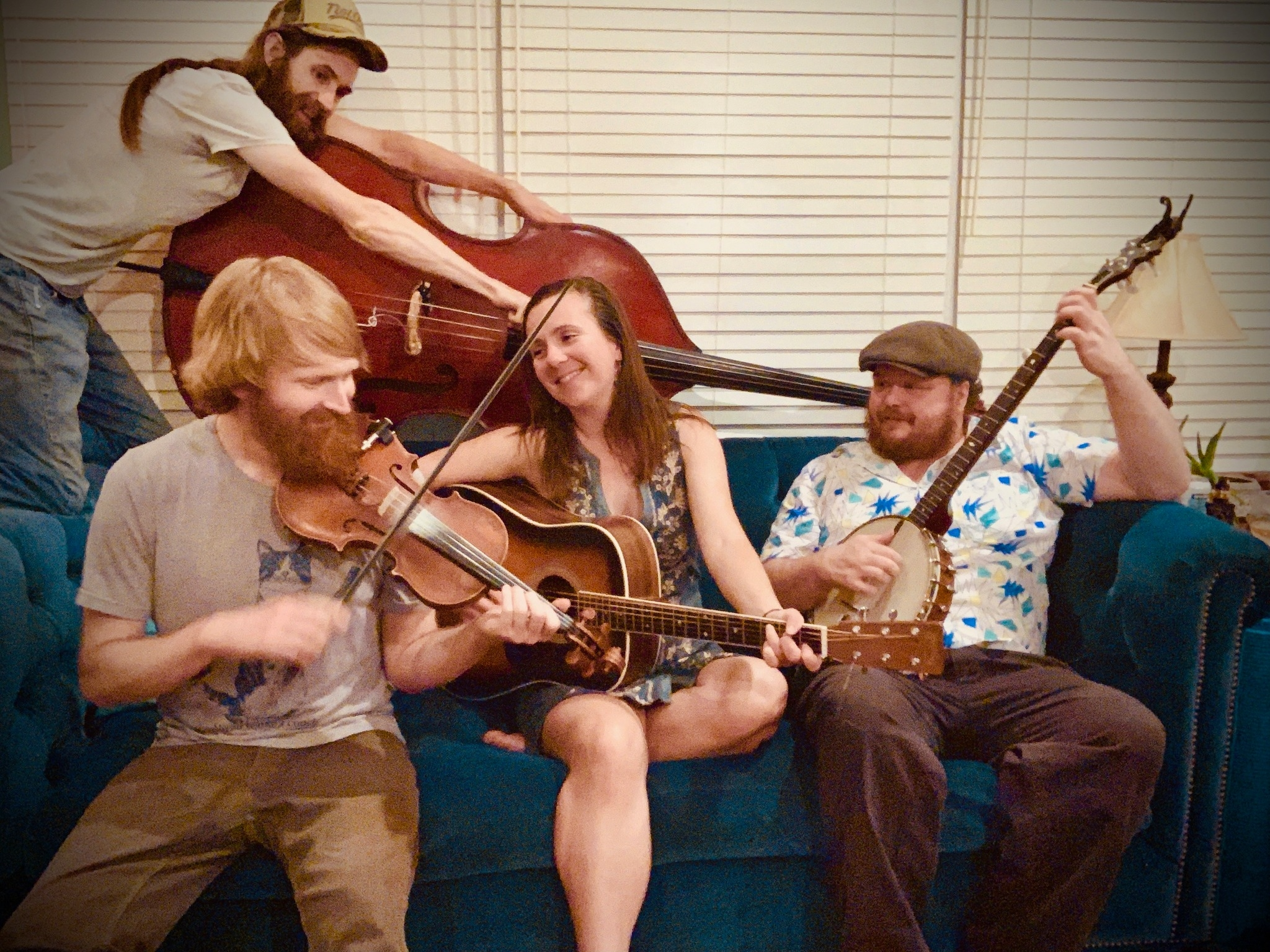
My husband and I have been playing music together for a long time. We play with a four-piece band: a fiddle, guitar, bass, and banjo. I play guitar and sing. We play Old Time music, with some old country styles thrown in. We play shows, we play weddings, we play around town. We have a big community in Atlanta that we play with. We just released two albums.
On the art side, I do a lot of basket weaving. I do painting, drawing, and woodwork. I do lots of different things! I've been selling at markets for over a year now.
You’re a busy woman.
I am!
Something that goes back to my upbringing, and Waldorf in general, is that feeling that you can explore—that you can be a scientist and a therapist and an artist and a musician. You shouldn't feel stifled by your career choice. You can always move and change and flow.
I think that's a big part of what I learned at Waldorf: I can forge my own path. And I can always take new paths.
How specifically do you think that the Waldorf education did that for you?
We looked at each subject in so many different ways. It wasn't just math. It was math through music, math through art, math through construction, math through physics.
Some people come out of school and they say, Oh, I'm not a math person. I'm not a science person. Because we learned in so many different ways, I could find a way to connect with every subject. I think that is super helpful and really sets a student up for success.
There's one block from middle school that really stands out to me. It's a math block where you use math to create 3-D shapes out of paper, like a dodecahedron. It blew my mind that math could create something physical. I loved that.
What else did you love at WSA?
I love to draw, so I loved the main lessons where we could really dive into that. We made our own textbooks. And, actually, I have a little story about that.
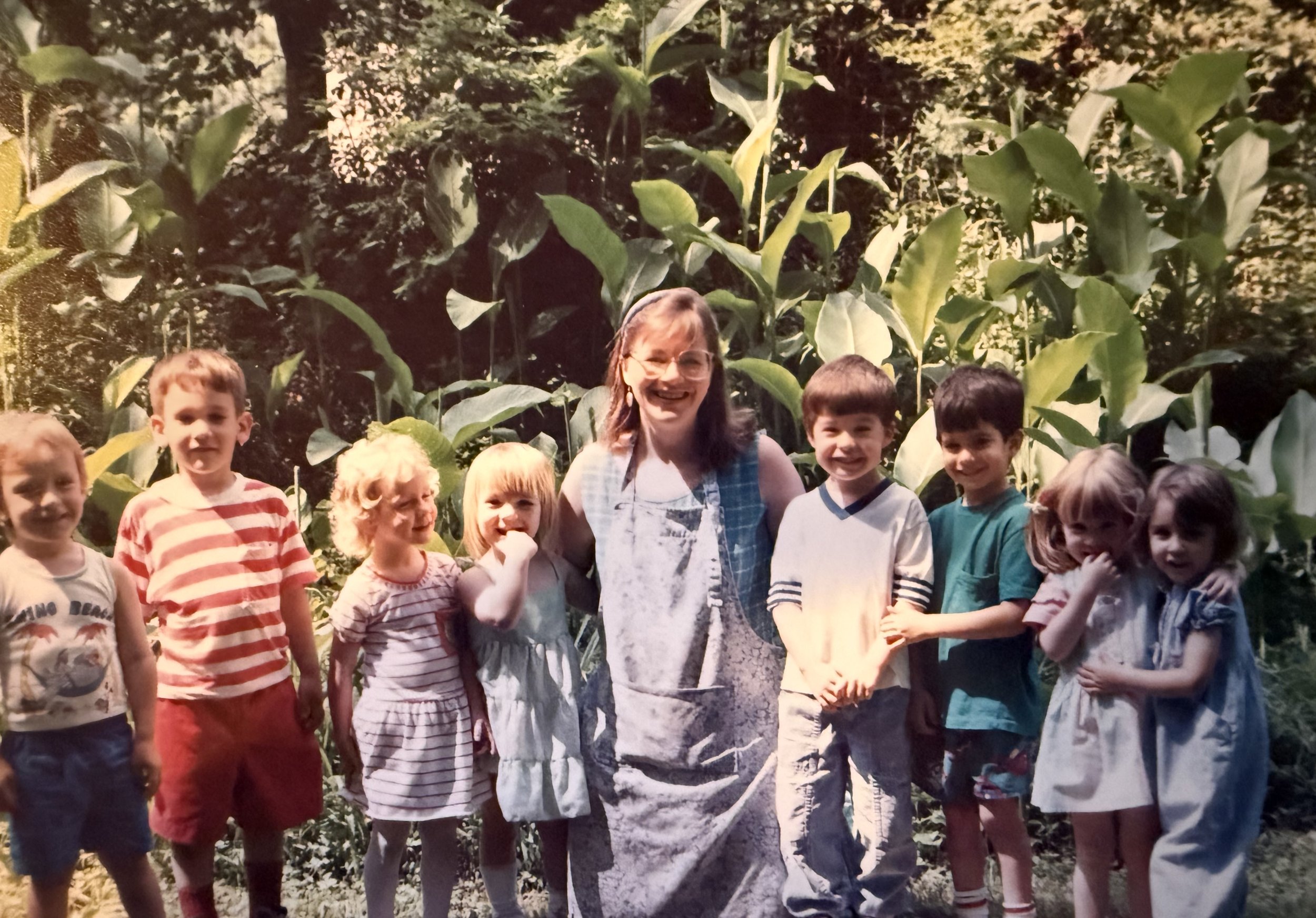
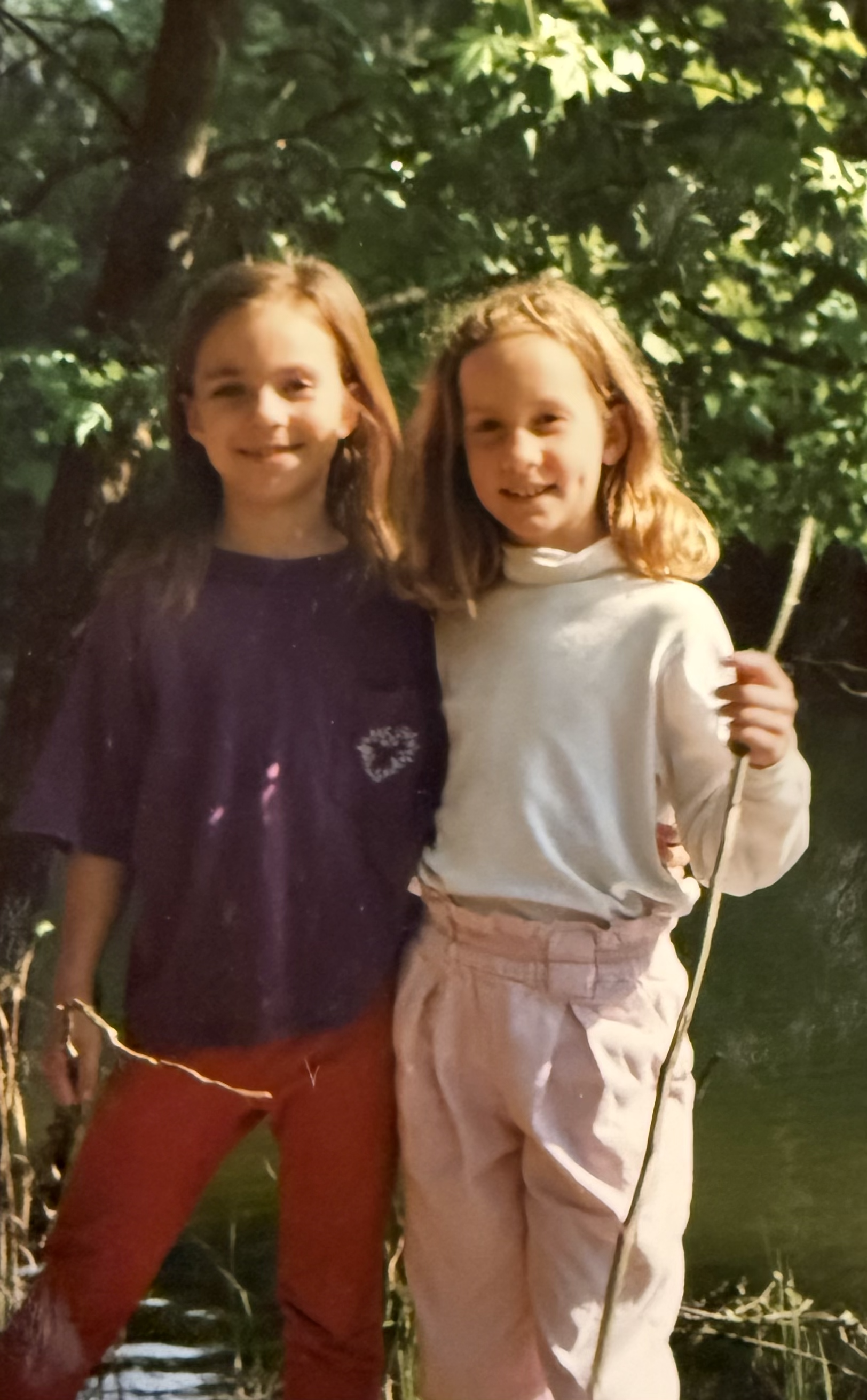
When I was in grad school, we had to learn all the muscles, all the veins, all the nerves, and all the bones in the human body. To study, I created my own main lesson book—and people were amazed by it. They asked, “How did you do that? Why did you do that?” A lot of people asked me to give them copies of my drawings because it helped them too! The process helped me learn. The physical act of drawing helped me understand each piece.
Grad school was hard. I think any grad school is hard, but I attended an accelerated program: seven semesters, no breaks, with something like 17 credits per semester. I had straight A's all the way through, but it was challenging. Finding a way to bring art or a creative modality into the learning really helped make it not as stressful.
It’s amazing to me that you understood yourself so well and how you learn best.
I think that's a big part of what I learned at WSA. I had a lot of learning challenges growing up. It took me a really long time to read. I saw the white in between the letters instead of the black, so it was very confusing. Then it finally clicked.
In some ways, I think it helped me to have struggled. My teachers really tried to understand, how do you learn? How best can we meet you? And from that, I learned how best to meet myself.